Social innovation
Social innovations are new solutions including products, services, models, markets, processes, and so on, which simultaneously meet a social need (more effectively than existing solutions) and lead to new or improved capabilities and relationships and better use of assets and resources. In other words, social innovations are both good for society and enhance society’s capacity to act[1].
The relationship between social innovation and environmental outcomes
Social innovation has a positive influence on the environmental outcomes. Social innovation seems like a valuable and powerful tool in order to get a good result for environment, which includes social groups to create and develop ideas and solutions about environment. In addition, social innovation is well positioned to deal with environmental challenges, which are multifaceted and often require social or behavioral shifts towards more sustainable options related to SDG (Sustainable Development Goal).
Case study of social innovation and environmental outcomes
If you have already understood the relationship between social innovation and environmental outcomes, some people maybe concern whether environmental outcomes can be effectively achieved through social innovation or not.
There is a case about specific social innovation, which exemplify environmental benefits being effectively achieved and work towards SDG (Sustainable Development Goal). There are initiatives in wastewater treatment and wastewater recycling. In addition, social innovation will lead to environmental benefits based on the concept of ecosystem services, supporting natural resources, such as wetlands and rivers, which provide a range of services to the local, national and global community.
Case study: Wastewater Treatment Project related to environmental social innovation [2]
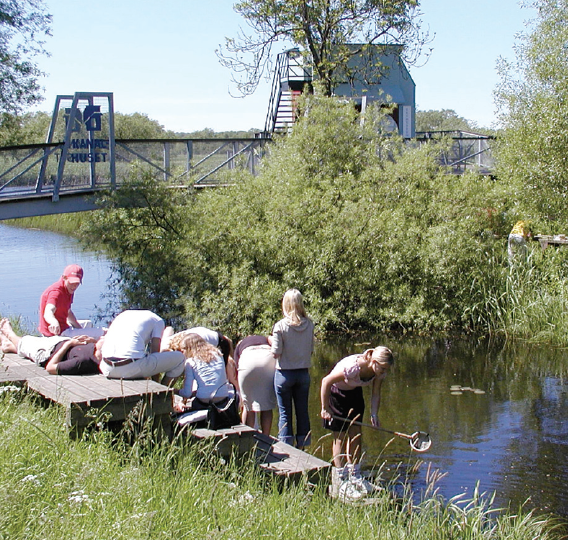
Kristianstads Vattenrike is a 35-km-long wetland area surrounded by cultivated landscape in southern Sweden, which provides important ecosystem services, such as flood control, water purification, biodiversity support, recreational space and grazing for cattle. For many years, farmers had used the wetlands for grazing and making hay but economic pressures had caused farmers to relocate to land that was easier to manage, which means the wetlands became wastewater, losing their value in terms of providing habitat for wildlife, recreational spaces and other ecosystem services.
Therefore, the local government came up with a social innovation, which had a positive influence on local environment. The eco-museum has been constructed as a social innovation in order to create a balanced relationship between people and nature improving the wastewater treatment where conservation and sustainable development go hand in hand with each other. In addition, biosphere reserves are designated by the United Nations to play an important role in managing the wetlands.
When the eco-museum Kristianstads Vattenrike as social innovation was established, the wetland was taken into consideration as an asset rather than an environmental problem, appealing to a range of values by integrating conservation with social development and creating a new identity for the town of Kristianstad. By doing so, the goal of management was no longer simply wastewater treatment but also supporting ecosystem services through social innovation, which does a great job in contributing to social and economic wellbeing. What’s more, the eco-museum as the social innovation formed a bridging organization, which can coordinate the fragmented efforts to manage wastewater and facilitated more collaborative management of this area with high environmental value.
The case of wastewater treatment project related to environmental social innovation mentioned above tends to provide multiple benefits or functions, which is the best results we would expect to see.
Recommendations to environmental social innovation related to SDG (Sustainable Development Goal)
- For the case of wastewater treatment project related to environmental social innovation mentioned above, biosphere reserves are designated by the United Nations to play an important role in managing the wetlands related to SDG, clause 15.1 [4], which ensure the conservation, restoration and sustainable use of terrestrial and inland freshwater ecosystems and their services, in particular forests, wetlands, mountains and drylands, in line with obligations under international agreements. Therefore, with the help of the United Nations, the issue of wastewater happening in wetland will be treated in a sustainable way in order to develop social innovation.

- Good environmental outcomes will require constant support from social innovation. Although the principles of social innovation, such as working collaboratively and in a participative manner, can be applied to improve the environment, there is a need for more detailed knowledge in wastewater related to SDG, clause 4.7 [4], which ensure that all learners acquire the knowledge and skills needed to promote sustainable development, including, among others, through education for sustainable development and sustainable lifestyles, human rights, gender equality, promotion of a culture of peace and non-violence, global citizenship and appreciation of cultural diversity and of culture’s contribution to sustainable development. Therefore, government should focus on strengthening the knowledge and encouraging individual initiative base on environmental social innovation, which will make sure that environmental results and outcomes are positive in a sustainable way in the years to come.
- In the case of social innovation that benefits the environment, methods from natural and social sciences may need to be combined to assess the joint effects on the environment and society. Impacts on biodiversity, air and water quality and climate change should be measured alongside impacts on health, quality of life and community cohesion related to SDG, clause 11.6 [4], which reduce the adverse per capita environmental impact of cities, including by paying special attention to air quality and municipal and other wastewater management. Therefore, environmental social innovation will be an exciting prospect for researchers, providing them with the opportunity to develop new methods, approaches and indicators in order to achieve environmental social innovation to a larger extent.
Reference
[1] https://en.wikipedia.org/wiki/Social_innovation
[2] Adams, D. & Hess, M. (2008). Social innovation as a new public administration strategy. In: Proceedings of the 12th Annual Conference of the International Research Society for Public Management.
[3]https://www.google.com/search?q=Biosf%C3%A4rkontoret,+Sven-Erik+Magnusson&rlz=1C1SQJL_zh-CNAU818AU818&source=lnms&tbm=isch&sa=X&ved=0ahUKEwib1MvX58jkAhUJfH0KHcSsApUQ_AUIEigB&biw=1707&bih=838&dpr=1.13#imgrc=_GoDUzvC_Jc5bM: [4] https://sustainabledevelopment.un.org/?menu=1300
 Wasterwater Treatment